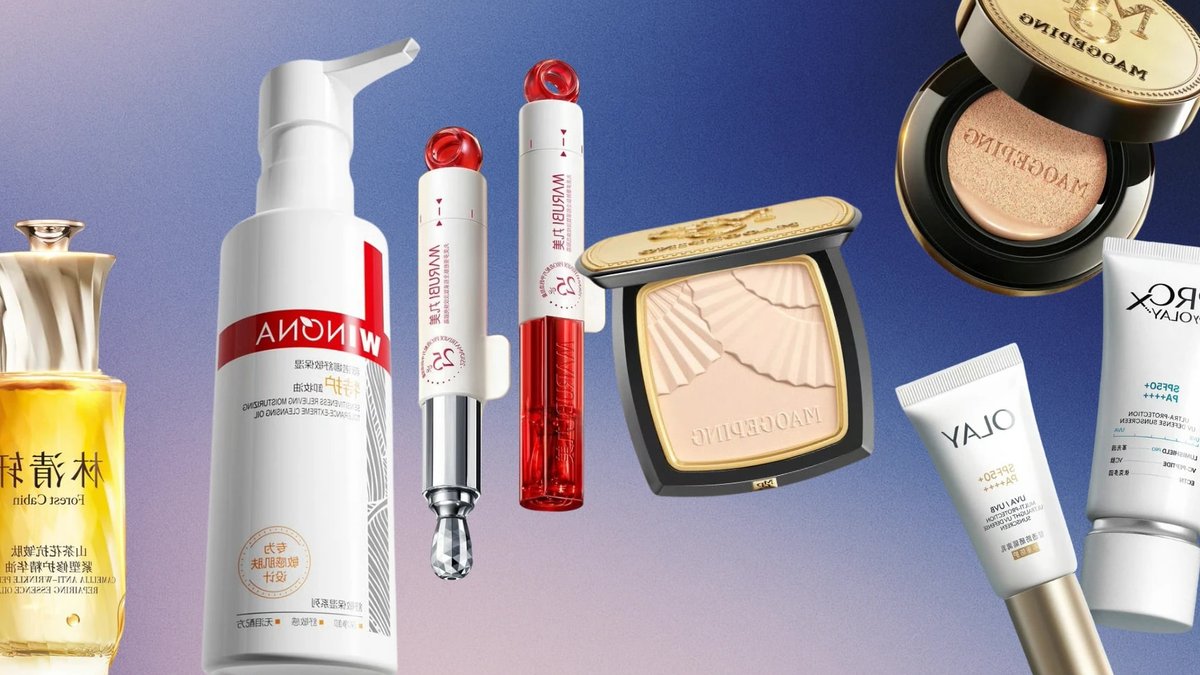
C-beauty firms posted mixed first‑half 2026 results, showing that the rapid expansion that lifted many domestic players may be easing.
Growth slowed.
Revenue growth stalls for leading groups
Proya remained the largest listed beauty group with 5.38 billion RMB in revenue, yet sales rose only 0.24% year‑on‑year. Its flagship label, accounting for about 69% of that total, slipped 7.19%, while the makeup line fell 21.93%.
The net profit jumped 46.26% largely because of a 445 million RMB investment gain from taking control of Flower Knows, not from core operations.
Haircare offerings expanded sharply: one line grew 70.81% to 477 million RMB. A new color cosmetics range added 313 million RMB after a 222.23% sales surge.
Skincare revenue, however, fell 6.87%, indicating that the next growth phase will rely on categories beyond the core skin‑care franchise.
New lines carry the next phase
After the flagship slowed, Chicmax saw group revenue dip to 3.76 billion RMB. Beneath the decline, a baby‑care skin line rose 59.9% to 635 million RMB, now representing roughly 17% of sales.
Read Also: Adidas launches VRCT jacket for self-expression
Another sensitive‑skin line increased 89.3%, giving the group a second sizeable offering that many rivals have chased for years.
For the sector, moving from a single dominant line to several that together sustain growth is becoming a tougher test.
While some firms launch fresh names, Mao Geping is widening the reach of its well‑known makeup line. The company added a primer that topped 100 million RMB in six months and pushed into sunscreen and liquid highlighter.
Makeup revenue rose 38.3% to 1.97 billion RMB, and skincare climbed 11.5% to 1.21 billion RMB, now making up about 38% of total sales.
Its fragrance experiment generated a 46% jump but stayed under 17 million RMB, less than 1% of revenue, showing the brand’s cautious step beyond face‑focused products.
In practice, the firm’s strategy means shoppers who trust its foundation can now find complementary prep and skin‑care items under the same roof, reducing the need to jump between unrelated labels.
Companies shift away from influencer livestreaming
Giant Biogene trimmed reliance on top livestreamers, accepting a short‑term dip as it moved sales to brand‑run streams and direct‑to‑consumer channels.
Another player, Marubi, saw its second label’s revenue fall 24.78% after cutting third‑party livestream sales.
Read Also: Fashion industry adopts digital transformation
The cost of traffic on China’s biggest livestream platforms can boost gross merchandise volume, yet margins often stay thin and brand loyalty may not deepen.
Companies that can steer shoppers toward owned streams or membership programs could turn the current contraction into a longer‑term advantage.
Diversifying product mixes and R&D spending
Lin Qingxuan posted a 42.6% revenue rise to nearly 1.5 billion RMB. Its signature camellia oil fell from 45.5% to 34.3% of sales, while toners and lotions surged roughly 264% to 355 million RMB.
Other groups followed similar patterns: Botanee’s new baby line and professional anti‑aging range outpaced its flagship, and Yatsen’s skincare portfolio now supplies more than 70% of its revenue.
Research spending varied widely. One biotech firm poured 212 million RMB—over 12% of revenue—into R&D but saw its beauty segment tumble 51%.
By contrast, the firm behind Mao Geping invested just 18 million RMB in research while delivering strong top‑line growth, suggesting that converting technology into sellable products matters more than the budget size.
These trends indicate that the next hurdle for domestic beauty groups is to build sustainable portfolios without depending on a single hit product, platform, or influencer.


